Professor Chapman
The Secret of SecretsProfessor Chapman is the local university professor whom Daeshim and Ricky Graham call upon when a homicide investigation requires entomological expertise. His brief but consequential role gives scientific authority to the insect evidence recovered from a body found at a bus terminal, while his required documentation preserves the integrity of the investigation’s evidence chain.
Professional Identity and Introduction
Professor Chapman is identified through his institutional specialty rather than through a personal scene. Daeshim’s work as a forensic science technician involves photographing crime scenes, making sketches, collecting samples, and analyzing laboratory evidence for clues that can help detectives solve cases. Within that professional system, Professor Chapman serves as the local university expert consulted when the evidence requires knowledge outside the technicians’ immediate field.
His specialty is entomology. The investigation therefore treats him not as a general academic adviser but as a precise scientific resource whose examination can convert the presence and condition of insects into evidence about a death. His importance comes from the expertise he contributes to the case, even though the narrative does not provide his appearance, biography, or personal history.
Role in the Bus Terminal Investigation
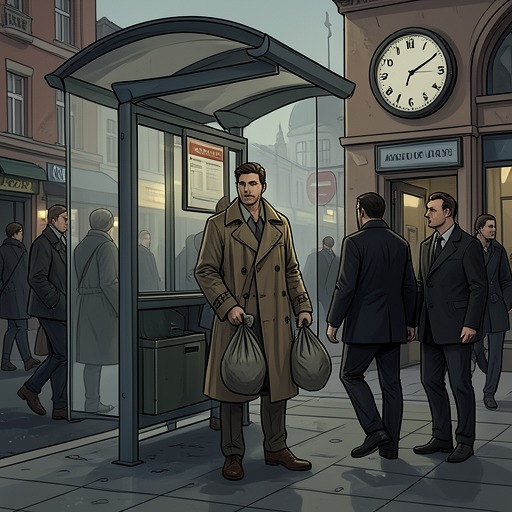
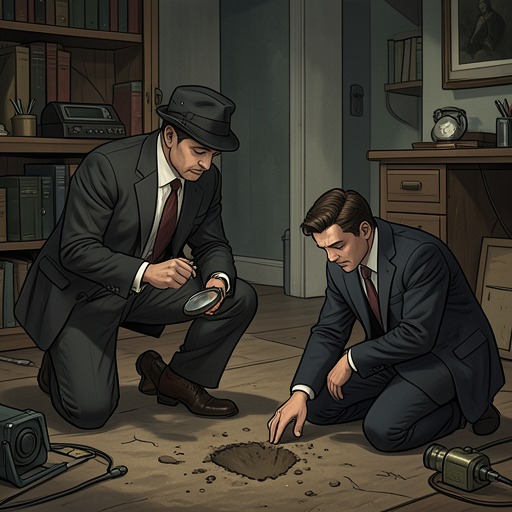
When Daeshim and Ricky examine the body at the terminal, they find it apparently undisturbed and believe it may have been there for at least a week. That estimate cannot be confirmed at the scene, so Daeshim collects insect-related material, including egg casings, beetles, and maggots, placing each type in separate bags. The insects are intended for an entomologist who can study them to help determine the time of death.
Professor Chapman is the professional who occupies that investigative position. After the technicians return to the laboratory, the insect egg casings and other specimens remain part of the evidence awaiting transfer to him. Daeshim specifically asks Ricky Graham whether Professor Chapman has been contacted, and Ricky confirms that he has. Chapman is expected to collect the specimens the following morning, establishing that the case depends on scheduled cooperation between the police laboratory and the university.
Evidence Transfer and Chain of Custody
The transfer to Professor Chapman is governed by the same procedural discipline that shapes Daeshim’s work. Daeshim plans to leave the insect bags beside the clipboard and instructs Ricky Graham to ensure that Professor Chapman signs them out if Daeshim is absent. The purpose is explicit: the evidence chain must not be broken. Chapman’s role therefore begins before he interprets the samples; it includes receiving them through a documented handoff that protects their credibility.
Ricky later confirms that Professor Chapman picked up the bugs about an hour earlier. This update marks the completion of the first transfer and allows Daeshim and Ricky to continue working with other evidence. Chapman’s unseen participation consequently produces a clear division of labor: the forensic technicians collect and document the specimens, while the university specialist receives them for expert study.
Connection to the Homicide Hypothesis
Professor Chapman’s examination becomes especially important after Ricky discovers grasses, dirt, and pine straw on the victim’s body and clothing. The material suggests that the body may have been killed elsewhere and moved to the terminal. Ricky’s discovery changes the investigation from a question of where the body was found to a broader inquiry into whether the terminal was merely a disposal site.
Daeshim responds by testing soil samples through X-ray diffraction and scanning electron microscopy to compare and identify their composition. The insect evidence sent to Professor Chapman complements those tests. Insects may help establish when death occurred, while soil, vegetation, photographs, and notes may help determine where the body had been before reaching the terminal. Together, these methods support the possibility that the death was a homicide and that the investigators may be able to locate the original scene.
Narrative and Thematic Significance
Professor Chapman is a peripheral, almost entirely offstage character, but his absence emphasizes the collective nature of forensic work. The investigation does not rest on Daeshim’s intuition alone. It proceeds through collected specimens, labeled bags, notes, photographs, laboratory procedures, specialist consultation, and documented custody. Chapman represents the wider professional network required to turn disturbing physical remnants into accountable knowledge.
His function also sharpens the contrast between the emotional and scientific strands of the story. Daeshim is privately pulled toward memories of Nyia Crosland and the eight years of separation between them, yet his professional attention must return to the body, the insects, and the samples. Professor Chapman belongs to the disciplined external structure that keeps the investigation moving while Daeshim struggles with personal regret. Although Chapman receives no developed personal arc and does not directly meet the reader, the case’s movement from discovery to interpretation depends on the expertise and procedural reliability associated with him.